
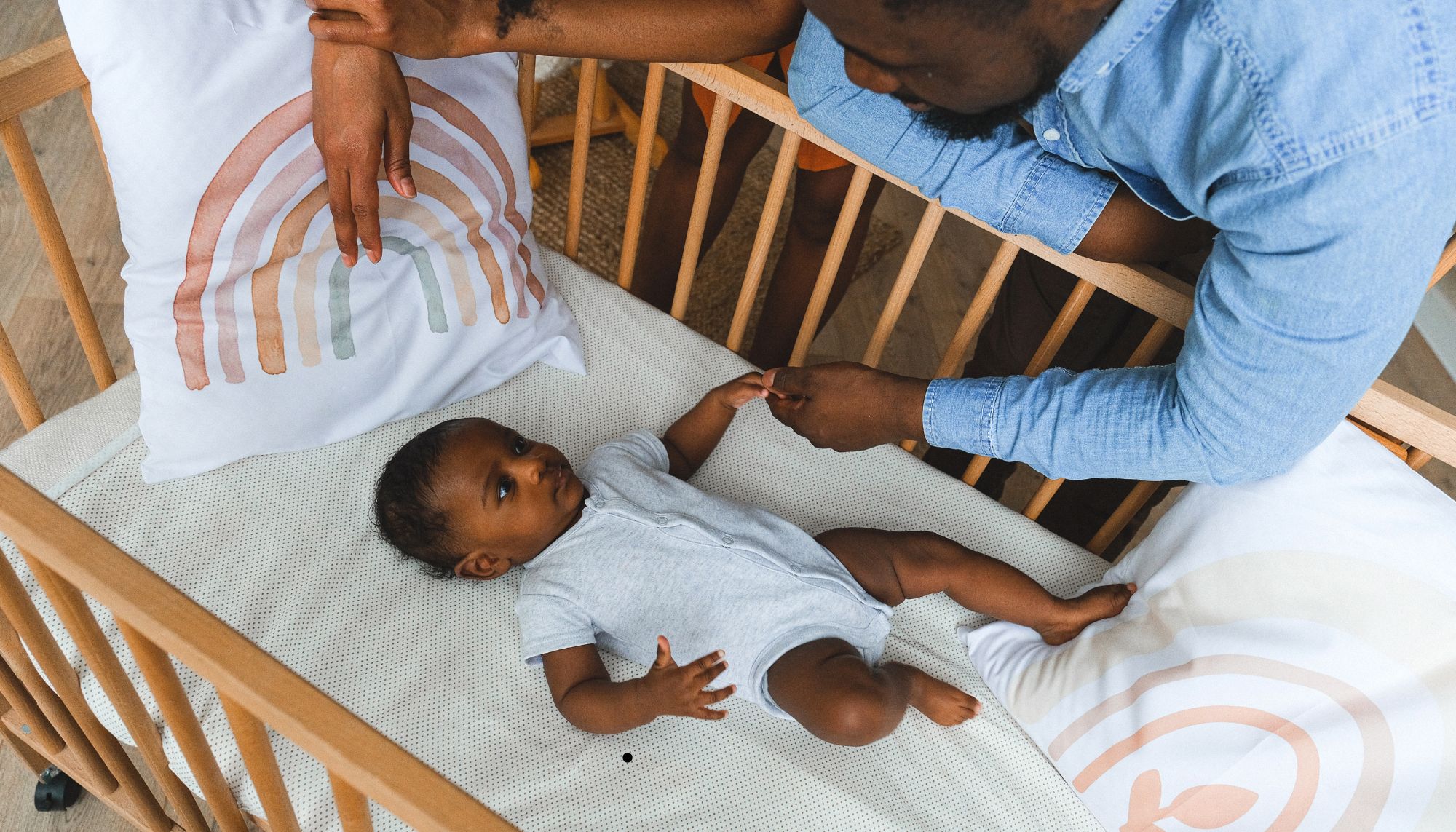
The chair sleep training method is a gradual approach that helps babies learn independent sleep skills while still feeling supported by a parent’s presence. Unlike faster sleep training methods, the chair method allows parents to remain in the room as their baby adjusts to falling asleep with less hands-on help over time. Because of its gradual and more responsive nature, many families consider it one of the gentler sleep training approaches.
With the chair method, the goal is not to suddenly remove comfort or connection. Instead, parents gradually reduce their involvement while maintaining consistency and reassurance throughout the process. This balance can help babies build healthy sleep habits in a way that feels emotionally manageable for both baby and parent.
If you’re new to sleep training altogether, I recommend starting with my guide to👉🏼Gentle Baby Sleep Training, where I cover the foundations of responsive sleep teaching, realistic expectations, and how to choose an approach that aligns with your comfort level.
What Is the Chair Sleep Training Method?
The chair sleep training method is a gradual sleep training approach where a parent stays beside their baby during bedtime while slowly reducing support over time. Typically, parents sit in a chair next to the crib as their baby falls asleep, offering reassurance through their presence while limiting hands-on soothing more each night.
How the Chair Method Works
The goal of the chair method is to teach independent sleep skills while still maintaining a sense of comfort and emotional support. Rather than immediately removing parental presence, this method allows babies to adapt slowly. This is why many families feel it aligns well with a gentle and responsive parenting approach.
Why Parents Choose This Approach
Many families are drawn to the chair sleep training method because it offers a more gradual alternative to faster sleep training approaches. Parents often appreciate being able to stay close and emotionally connected while still encouraging independent sleep skills. The chair method can feel especially reassuring for families. Most prefer responsive sleep support and want a gentle approach that matches their child’s temperament and developmental needs.
If you are unsure when to start, this article may help: 👉🏼 When To Start Baby Sleep Training: All You Need To Know.
How to Prepare for the Chair Method
Preparing for the chair sleep training method can make the process feel smoother and more manageable for both parents and babies. Before starting, it is important to focus on healthy sleep foundations, age-appropriate schedules, and a calming bedtime routine. Consistency helps children feel secure and makes it easier for them to understand what to expect at sleep time.
Create a Consistent Bedtime Routine
A predictable bedtime routine helps signal to your baby that sleep is approaching. Simple calming activities such as a bath, pajamas, feeding, books, cuddles, or lullabies can help your child wind down and transition into sleep more peacefully. Keeping the routine consistent each night creates familiarity and supports healthy sleep habits over time.
Set Up a Sleep-Friendly Environment
Creating a calm sleep environment can also support success with the chair sleep training method. A dark room, comfortable temperature, white noise, and a safe sleep space can help reduce overstimulation and encourage better sleep. Limiting distractions in the room may also make it easier for your baby to focus on settling independently while still feeling comforted by your presence nearby.
If you are worried about tears and attachment during sleep training, I encourage you to download this completely free guide.

How to Use the Chair Sleep Training Method
The chair sleep training method is designed to gradually help babies learn to fall asleep independently while still feeling supported by a parent’s presence. The process typically happens over several nights as parents slowly reduce their involvement at bedtime. Consistency and patience are important, as every child adjusts at their own pace.
Start Beside the Crib
The first step of the chair method involves sitting beside your baby’s crib or sleep space while they fall asleep. Parents can offer calm reassurance through their presence, voice, or occasional gentle touch. without fully rocking or feeding the baby to sleep. The goal is to help your child feel secure while beginning to practice settling with less hands-on support.
Gradually Move Further Away
Once your baby becomes more comfortable falling asleep with you nearby, the chair is gradually moved farther away from the crib every few nights. This slow transition helps reduce sleep associations while still maintaining a sense of security. Over time, your baby begins relying less on your physical presence and more on their own independent sleep skills.
Transition Out of the Room
The final stage of the chair sleep training method is transitioning completely out of the room before your child falls asleep. By this point, many babies have developed the ability to settle more independently with minimal reassurance. Some children may still need occasional support or check-ins during the process. It is completely normal as they continue building confidence and healthy sleep habits.
👉🏼 Is Baby Sleep Training Without Cry It Out Possible? will also ease your concerns about the process of gentle baby sleep training.
Challenges With the Chair Sleep Training Method
Like any sleep training approach, the chair method can come with challenges along the way. While many families appreciate its gradual and supportive nature, some babies may find the process frustrating as they adjust to new sleep habits. Understanding common difficulties ahead of time can help parents stay calm, flexible, and consistent throughout the process.
When Your Presence Becomes Distracting
For some babies, having a parent remain in the room can actually become more stimulating than comforting. Children may cry harder, reach for interaction, or become frustrated because they can see their parent nearby but are still being encouraged to fall asleep independently. In these situations, parents may need to reduce interaction, move through the stages more gradually, or consider whether another sleep training approach may better suit their child’s temperament.
Staying Consistent Through Setbacks
Progress with the chair sleep training method is not always perfectly linear. Some nights may feel easier while others can bring increased protests, frequent wakings, or difficulty settling. Travel, teething, illness, developmental changes, and overtiredness can also temporarily disrupt progress. Staying as consistent as possible while continuing to respond calmly and supportively can help your baby build confidence and maintain healthy sleep habits over time.
Is the Chair Sleep Training Method Right for Your Family?
The chair sleep training method can work well for families looking for a gentle and gradual approach to improving sleep. However, every child has a unique temperament, and no single method works for every family. Choosing a sleep training approach that aligns with both your parenting style will make the process feel more manageable and effective.
Babies Who May Respond Well
Many babies who benefit from the chair method are comforted by a parent’s presence and adjust well to gradual change. Families who prefer responsive sleep support often appreciate the ability to stay nearby while still encouraging independent sleep skills. The chair method may also work well for children who become overwhelmed by faster transitions or more sudden changes to bedtime routines.
When Another Method May Be Better
In some cases, the chair method may not be the best fit. Certain babies become more stimulated or frustrated when a parent remains in the room. As a result, it can make falling asleep more difficult. Families who are looking for a faster approach or children who respond better to clearer boundaries may find another sleep training method more effective. Every baby is different, and sometimes small adjustments can make a significant difference in sleep progress.
Final Thoughts on the Chair Sleep Training Method
The chair sleep training method can be a gentle and supportive way to help your baby learn independent sleep skills. Because it is a gradual approach, many parents appreciate that they can stay present and offer reassurance as their child learns. While it does require consistency and patience, many families find it to be a balanced middle ground between hands-on support and independent sleep.
If you wonder how long the sleep training process may take, I encourage you to read this guide: 👉🏼 How Long Does Gentle Sleep Training Take: All You Need to Know
Chair Sleep Training Method FAQs
Is the chair method considered gentle?
Yes, the chair method is generally considered a gentle sleep training approach. It allows parents to stay present while gradually reducing support over time.
How long does the chair method take?
The timeline varies depending on your baby’s age, temperament, and consistency, but many families see progress within 1–3 weeks.
Can the chair method work for toddlers?
Yes, the chair method can be used with toddlers as long as expectations are age-appropriate and routines remain consistent. Some toddlers may need additional structure depending on their sleep habits and developmental stage.


If you are feeling unsure about whether the chair sleep training method is the right fit for your child or you’re struggling with ongoing sleep challenges, personalized support can make the process much easier. At Baby Sleep Pros, I offer gentle, responsive pediatric sleep consulting tailored to your baby’s needs and your family’s goals. Whether you need virtual guidance or in-home support throughout Maryland, Washington DC, and Northern Virginia, I can help you create a clear, supportive plan to improve sleep while maintaining connection and confidence along the way.
